

While fast fashion has brought increasingly severe resource waste and environmental pollution, sustainable fabrics have sparked a quiet revolution in the textile industry. From recovering plastic bottles from oceans to extracting natural fibers from crops, and to fabrics that can naturally degrade by themselves, sustainable fabrics have injected new power for sustainable fashion development through multiple innovations. This green revolution focuses on these three core aspects – regenerated fabrics, bio-based fabrics, and biodegradable fabrics, and each of them has embodied the coexistence wisdom of human and nature. Here, we – ac·green®, a high-end custom eco hats manufacturer, will introduce these 3 types of sustainable fabrics in detail.
What Are Regenerated Fabrics?
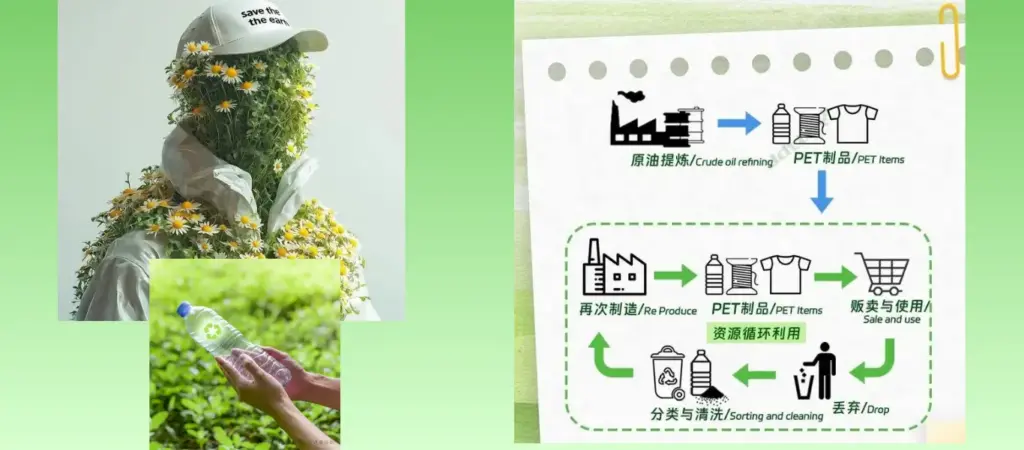
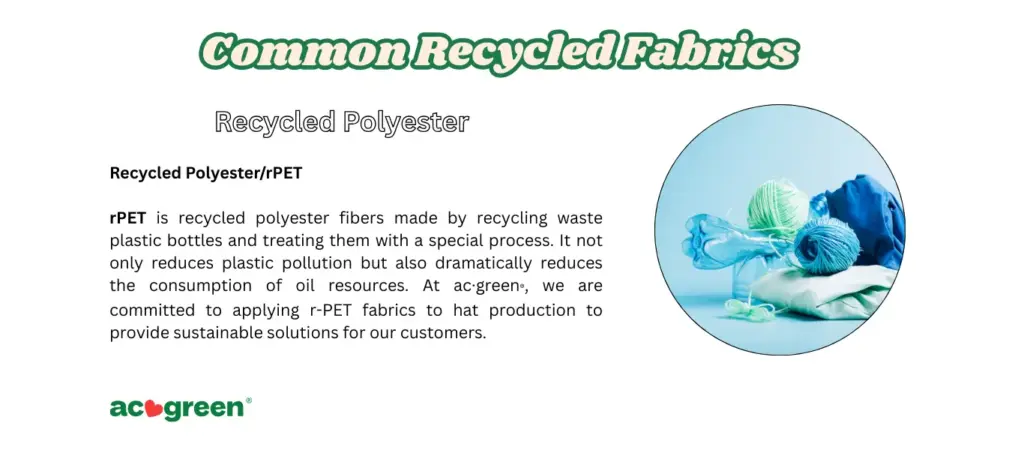
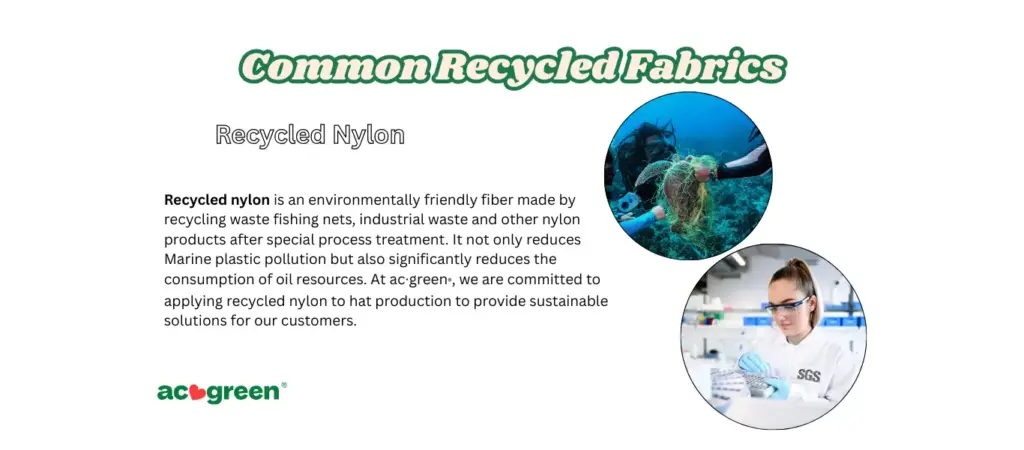
Regenerated fabrics mean sustainable fabrics that are made from recycled or processed waste or fabrics, or textile industrial waste. The core value is to utilize possible waste to turn it into recycled textiles, which can reduce the consumption of raw resources and environmental burden.
Regenerated fabrics are one of the core solutions that the modern textile industry faces resource risk and environmental pollution. Moreover, regenerated fabrics mark a deep shift in the economy from a linear economy (take-make-dispose) to a circular economy. Although challenges remain in the recycling system and technology, the direction of development is clear. For consumers, choosing fabrics with GRS is a great support for the circular economy. In the future, regenerated fabrics, bio-based fabrics, and biodegradable fabrics can compose a new, multiple, sustainable textile system.
Key Certification Standards
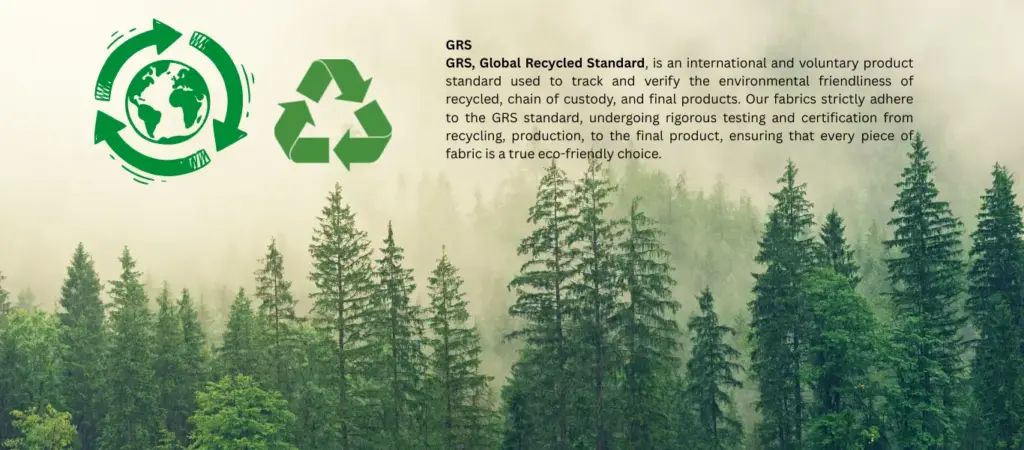
- GRS: Global Recycled Standard is the most popular international standard, and has strict requirements for recycled contents of products, environments, and social responsibilities, providing the supply chain traceability.
- RCS: Recycled Claim Standard. Compared to GRS, the Recycled Claim Standard mainly focuses on the recycled content of the product.
- OEKO-TEX®: This is an independent, international certification system for textiles and leather products, ensuring they are free from harmful substances and safe for human health.
- Certification for Specific Brands: Such as ECONYL® and Repreve®, both are material brands and also indicate their recycling sources and quality.
What Are Bio-based Fabrics?
Bio-based fabrics are made from fibers that are utilized organisms or their extracts. For example, PLA fiber that is derived from renewable plants, like corns, sugarcane, wheat, and sugar beet; alginate fiber is derived from brown seaweed. Bio-based fabrics make a completely contract with conventional fabrics like polyester, nylon, and acrylic fabric that are derived from petroleum. However, please know that bio-based fabrics are not equal to natural fibers like cotton, linen, wool, and silk. Because many bio-based fabrics are produced through industrial processing and chemical treatment, which belongs to artificial fibers or synthetic fibers. However, the original raw fibers are biomass rather than fossil resources.
Bio-based fabrics are the key path that the textile industry shifts to a green model, which presents the economic transformation from petroleum to biology. Although right now we still face the challenges of cost and technology,bio-based fabrics have great eventuality in reducing the footprint, exercising renewable coffers, which can come to the mainstream in cloth development in the future. Thus, when choosing, consumers should also pay attention to specific raw material sources, biodegradability status, and full-chain environmental instruments.

What’s Biodegradable Fabric?
Biodegradable fabrics are fabrics that incorporate a specific proportion of biodegrading agents into the fiber melt spinning process, fully blending them with the base polymer, which can produce numerous biodegradable points within the plastic matrix. Biodegradable fabrics can offer an implicit technological path for addressing the end- of- life problem of fabrics. still, it’s not a final once-and-one-for- all way, and it largely relies on clear conditions, strict instruments, and a reciprocal waste operation system.
For consumers and brands, the right and correct recognition layers should be extended product use time > repeatedly utilizing > recycled and remade > recycled energies > degradable treatments.
When choosing biodegradable fabrics, it’s essential to find a clear, dependable third party to certify them and to know the factual degradability conditions and operation scripts. Biodegradable fabrics are a vital aspect in the future textile industry, but not the final answer that can replace all other results.
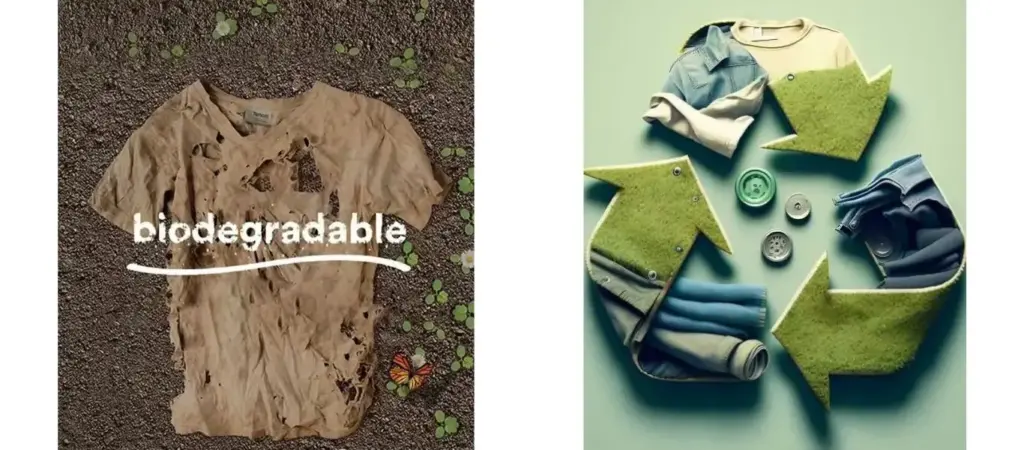
Key Certificated Standard
A reliable instrument is vital to distinguish between the fake and the genuine.
OK Compost Industrial( certified by TÜV Austria): OK Compost Industrial is a sanctioned instrument marker that indicates a product is artificial compostable with an artificial composting installation, not at home. Generally, this process requires special conditions like high heat, controlled humidity, and commodity shredding to completely break down. It’s issued by TÜV Austria, one of the main associations that certifies compostable products in line with European norms( specifically EN 13432). This standard sets the rules for how fast and how fully a material must break down under artificial conditions.
OK Compost Home: OK Compost Home instrument indicates that products are compostable in home composting systems, breaking down into organic matter without leaving dangerous remainders, with stricter conditions.
DIN-Geprüft Industrial Compostable: Germany standard like industrial composting certification.
Seedling Logo: A registered trademark owned by European Bioplastics.
BPI: Certification by the U.S. Biodegradable Products Institute
Features of Sustainable Fabrics

1. Environmental promise under gently wrapping
Underwear, as the most intimate outfit, which is close to our skin, has an extreme requirement for fabric comfort and safety. The application of regenerated fabrics in this field not only can meet these demands, but also can give these outfits a more meaningful and sustainable meaning.
2. Green energy in sports
Gym wear needs excellent permeability, elasticity, and moisture-wicking to meet the body’s demands when doing sports. Eco-friendly, bio-based fabrics can become the favorite choice among fitness enthusiasts based on their excellent performance.
3. Sustainable choices for swimming
Due to the exceptional resilience and durability of biodegradable fabrics, sustainable biodegradable fabrics are the primary choices for many high-end swimming suits brands. Wearing a swimming suit made from biodegradable fabrics seems to move forward with environmental protection, and every stroker brims with tender care for our planet.
In the End
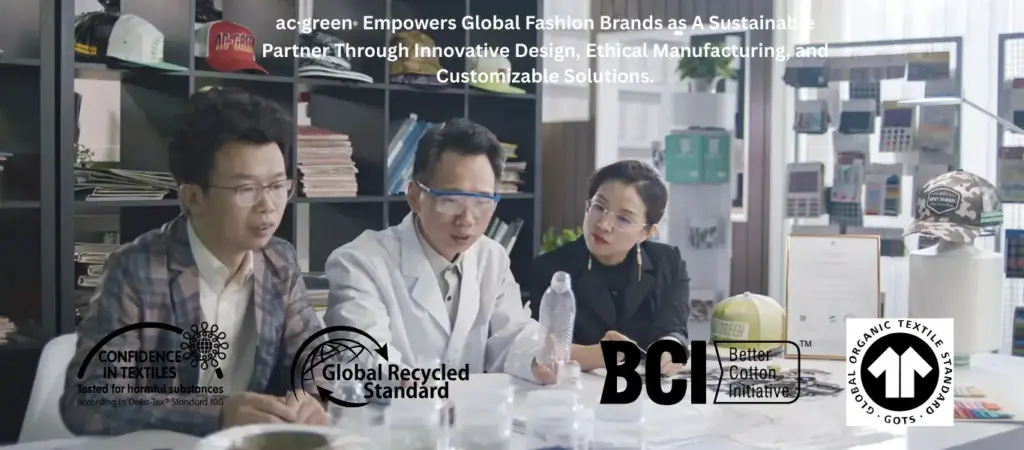
Our sustainable fabrics are not only the practice for sustainable fashion, but also obtain international eco-friendly certifications from OEKO-TEX® – textile certification and GRS -Global Recycled Standard. Each certification is proof that our supply chain shifts to be transparent and green, and practices the principles of “social responsibility and sustainable development”, which can offer reliable eco-friendly choices. Moreover, biodegradable fabric certifications mean that at the end of the lifespan of products can enhance the process of natural composting, which can reduce the long-term burden of our planet. All these certifications are recognized for our sustainable capability and the solid safeguard for consumers’ choices.