
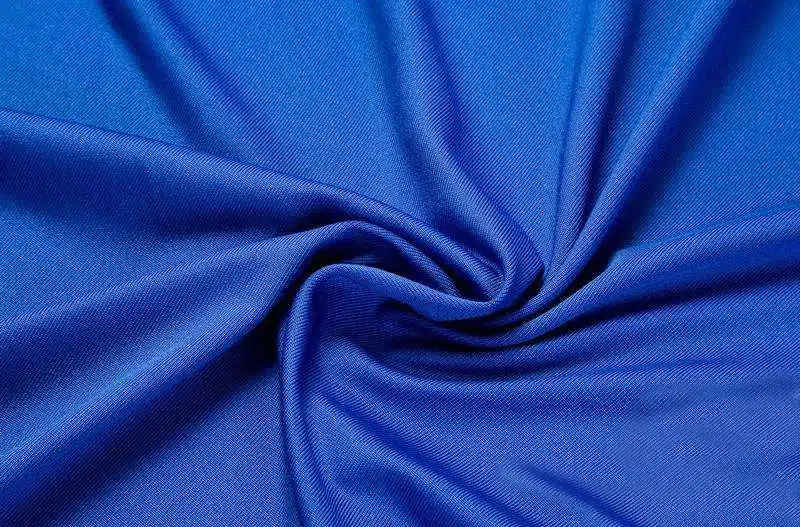
The difference between rPET fabric and ordinary polyester fabric is simply the source of the fabric yarn.
Recycled PET fabric
RPET fabric is a new type of environmentally friendly recycled fabric, also known as Recycled PET Fabric. Its yarn is extracted from recycled mineral water bottles and cola bottles, and it is also commonly known as cola bottle eco-friendly fabric.
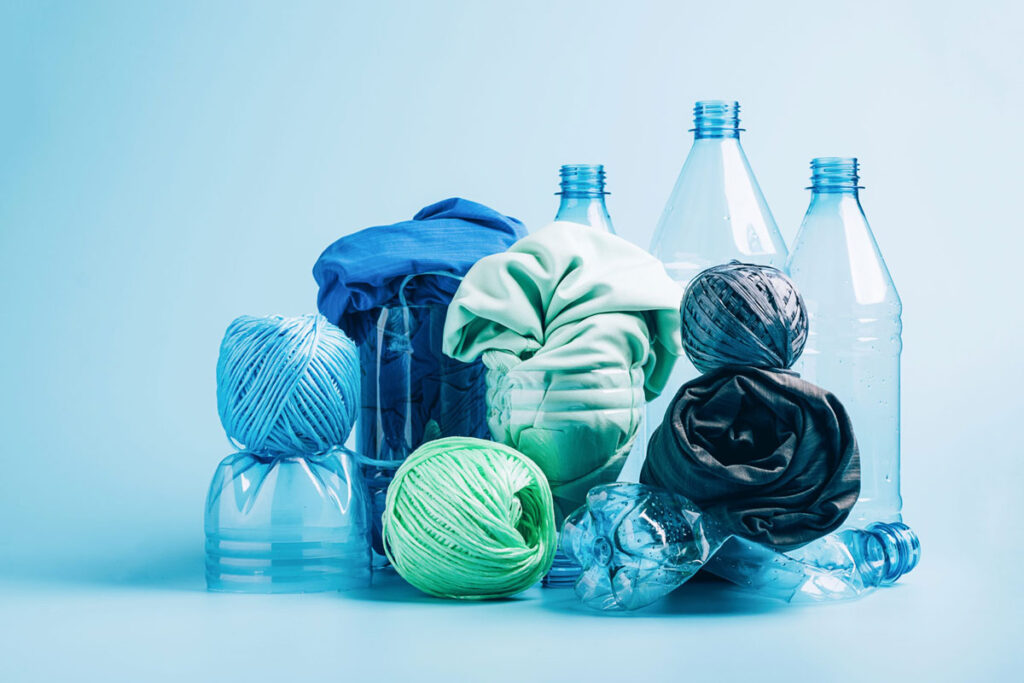
As a new type of green, recycled, and environmentally friendly fabric, its low-carbon origin makes a significant contribution to conserving petroleum resources and protecting the ecological environment. Therefore, it is highly favored abroad, especially in developed countries in Europe and America, and is widely used in tank tops, shirts, skirts, children’s clothing, scarves, cheongsams, ties, handkerchiefs, home textiles, curtains, pajamas, bows, gift bags, arm warmers, fashionable umbrellas, pillowcases, cushions, and more.
Ordinary polyester fabric
As is well known, the yarn in ordinary polyester fabrics is made from petroleum.

Ordinary polyester fabric: This refers to ordinary polyester (POLY), whose chemical name is polyethylene terephthalate (PET). Its tensile strength and elongation at break are higher than cotton fiber, and it has excellent heat resistance and thermal stability. Due to its many superior properties, it is widely used in clothing, home textiles, decoration, and industrial products. Its rapid development and high production volume have earned it the reputation of being the “king of chemical fibers.”
The difference between recycled polyester and regular polyester
Different performance
- Regenerated polyester fibers have poor strength and other properties.
- Polyester fibers have relatively good strength and other properties.
Different raw materials
- Recycled polyester is made by re-granulating recycled materials (PET bottle flakes, foam, etc.) and then drawing them into fibers.
- Polyester is produced by polymerizing and esterifying chemical raw materials PTA and MEG and then drawing it into fibers.
Polyester yarn refers to yarn spun from polyester, a polymer fiber produced through spinning. Currently, it often refers to fibers made from polyethylene terephthalate (PET), commonly known as “PET fiber.”
Recycled polyester staple fiber is made from polyester fabric, waste polyester bottle flakes, waste spinning fibers, foam material, and pulp blocks as raw materials. The waste bottle flakes are crushed and washed, and the mixture of various materials is dried, melt-extruded, spun, wound, bundled, drawn, crimped, relaxed, heat-set, and cut to form polyester staple fibers of different lengths.
In comparison, environmentally friendly polyester not only possesses the advantages of ordinary polyester but also aligns more closely with the concept of green environmental protection, making it more suitable for a wider range of customers.
Characteristics of polyester

1, High strength and toughness. The strength of short fibers is 2.6 to 5.7 cN/dtex, and that of high-strength fibers is 5.6 to 8.0 cN/dtex.
Due to its low hygroscopicity, its wet strength is essentially the same as its dry strength. Its impact strength is 4 times higher than nylon and 20 times higher than viscose fiber.
2, Excellent elasticity. Its elasticity is close to that of wool; when stretched by 5%–6%, it can almost completely recover. Its wrinkle resistance surpasses other fibers, meaning the fabric does not wrinkle and has good dimensional stability. Polyester fabrics possess high strength and elastic recovery ability, making them durable, wrinkle-resistant, and require no ironing.
3, Heat-resistant polyester is made by melt spinning, and the shaped fibers can be melted again by heating, making it a thermoplastic fiber.
At the same time, it has a relatively high melting point, but low specific heat capacity and thermal conductivity, resulting in superior heat resistance and insulation properties. It is the best among synthetic fibers.
4, Good thermoplasticity, but poor melt resistance. Due to its smooth surface and tightly packed internal molecules, polyester is the most heat-resistant synthetic fiber fabric. It has thermoplasticity, can be used to make pleated skirts, and the pleats are durable.
Meanwhile, it has poor resistance to melting and are prone to forming holes when exposed to cigarette ash, sparks, etc. Therefore, contact with cigarette butts, sparks, etc. should be avoided as much as possible when wearing them.
5, Excellent abrasion resistance. Its abrasion resistance is second only to nylon, which has the best abrasion resistance, and is better than other natural and synthetic fibers.
6, Good lightfastness. Its lightfastness is second only to acrylic fiber. Polyester fabrics have good lightfastness; except for being inferior to acrylic fiber, their sun resistance surpasses that of natural fiber fabrics. Especially behind glass, its sun resistance is excellent, almost on par with acrylic fiber.
7, Corrosion resistant. It is Resistant to bleach, oxidants, hydrocarbons, ketones, petroleum products, and inorganic acids.
It is resistant to dilute alkalis and mold, but hot alkalis can decompose it. It also has strong resistance to acids and alkalis, as well as resistance to ultraviolet rays.
8, It has poor dyeability, but good color fastness and is not easy to fade. Because there are no specific dyeing groups on the polyester molecular chain and the polarity is relatively small, dyeing is more difficult and the dyeability is poor. Dye molecules do not easily enter the fiber.
9, It has poor moisture absorption, making it feel stuffy when worn and it is also prone to static electricity and dust accumulation, affecting its appearance and comfort.
However, it dries very easily after washing, and its wet strength hardly decreases, it does not deform easily, and it has good wash-and-wear properties.